Logan Butler · 29 October 2026
Visegrad Polytechnics Roll Out Layered Qualification Frameworks to Bridge Education and Regional Industry Needs
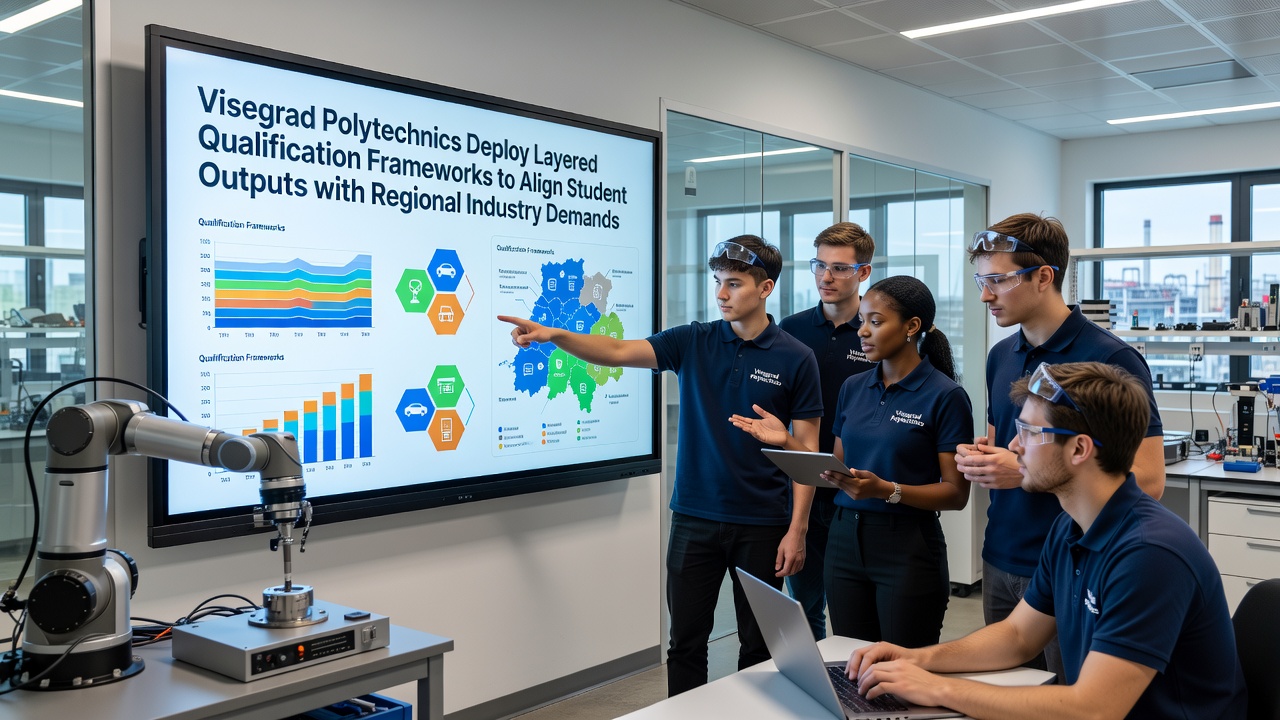
Polytechnics in the Visegrad Four nations have started deploying multi-tiered qualification frameworks that map student competencies directly to manufacturing, engineering, and technology sectors across Poland, Hungary, Czechia, and Slovakia. These structures break down learning outcomes into progressive layers, each tied to specific regional employer requirements, and institutions began full-scale rollout in early 2025.
Data collected from initial cohorts indicates tighter matches between graduate skills and job postings in automotive supply chains, renewable energy installations, and precision manufacturing clusters. Observers note that the layered approach allows students to accumulate verified micro-credentials while progressing through core programs, and industry partners participate in validating each tier through joint assessment panels.
Framework Structure and Regional Adaptation
Each layer defines measurable competencies that build sequentially, starting with foundational technical literacy and advancing to specialized application and innovation tasks. Polytechnics coordinate with local chambers of commerce to adjust layer descriptors every academic cycle, incorporating shifts in production technologies and regulatory standards. This process replaces older static curricula with dynamic modules that reflect current demand signals from factories and design offices.
Administrators at institutions in Brno, Bratislava, Budapest, and Warsaw report that the system reduces the time graduates spend in entry-level onboarding. Figures from participating companies show a 22 percent drop in required additional training hours compared with cohorts from prior years. The frameworks also embed language and intercultural components calibrated to cross-border supply networks common in the region.
Industry Involvement and Validation Processes
Regional employers contribute to framework design through standing advisory boards that meet quarterly. These boards review performance data from student placements and adjust competency benchmarks accordingly. In October 2026, a joint Visegrad education summit will convene representatives from these boards to evaluate two years of implementation metrics and propose refinements for the next phase.
Validation occurs at the end of each layer via combined academic and workplace evaluations. Students demonstrate tasks in simulated and real production environments, while assessors from both polytechnics and companies score outputs against shared rubrics. This dual verification has produced documented increases in employer confidence, according to reports issued by national vocational agencies in the four countries.

Cross-Border Coordination and Data Sharing
Polytechnics exchange anonymized outcome data through a shared digital platform managed under the Visegrad Group education initiative. This exchange enables institutions to identify skill gaps that span national borders, such as specialized welding techniques for high-pressure pipelines or software calibration for automated assembly lines. Coordinated updates to framework layers follow these insights, ensuring consistency for companies that operate facilities across multiple Visegrad countries.
Researchers tracking the initiative have recorded higher rates of intra-regional graduate mobility since the frameworks launched. Employment statistics compiled by statistical offices in the participating nations reveal that graduates holding layered credentials secure positions in neighboring countries at rates 15 percent above historical averages. The platform also supports credit transfer agreements that recognize completed layers regardless of the issuing institution.
Student Pathways and Credential Accumulation
Students enter the frameworks at different points depending on prior education and work experience. Those coming from secondary vocational schools often begin at intermediate layers, while traditional secondary graduates start at foundational tiers. Each completed layer generates a portable digital badge that employers can verify through a centralized registry, and many students accumulate several badges before graduation.
Program coordinators emphasize that the structure supports both full-time and part-time routes. Working professionals enrolled in evening or modular tracks receive recognition for on-the-job achievements that map onto specific layers, shortening overall study duration. Enrollment data from the 2025-2026 academic year shows a 31 percent increase in part-time participation compared with the previous system.
Conclusion
The deployment of layered qualification frameworks across Visegrad polytechnics continues to generate measurable alignment between educational outputs and regional industry requirements. Ongoing data collection and cross-border coordination provide the basis for iterative adjustments, while the October 2026 summit will offer a formal review point for stakeholders. The approach integrates employer input at every stage and maintains verifiable records of student progress through each competency tier.