Frankie Flores · 17 September 2026
Eastern European Vocational Networks Deploy AI for Engineering Language Acceleration
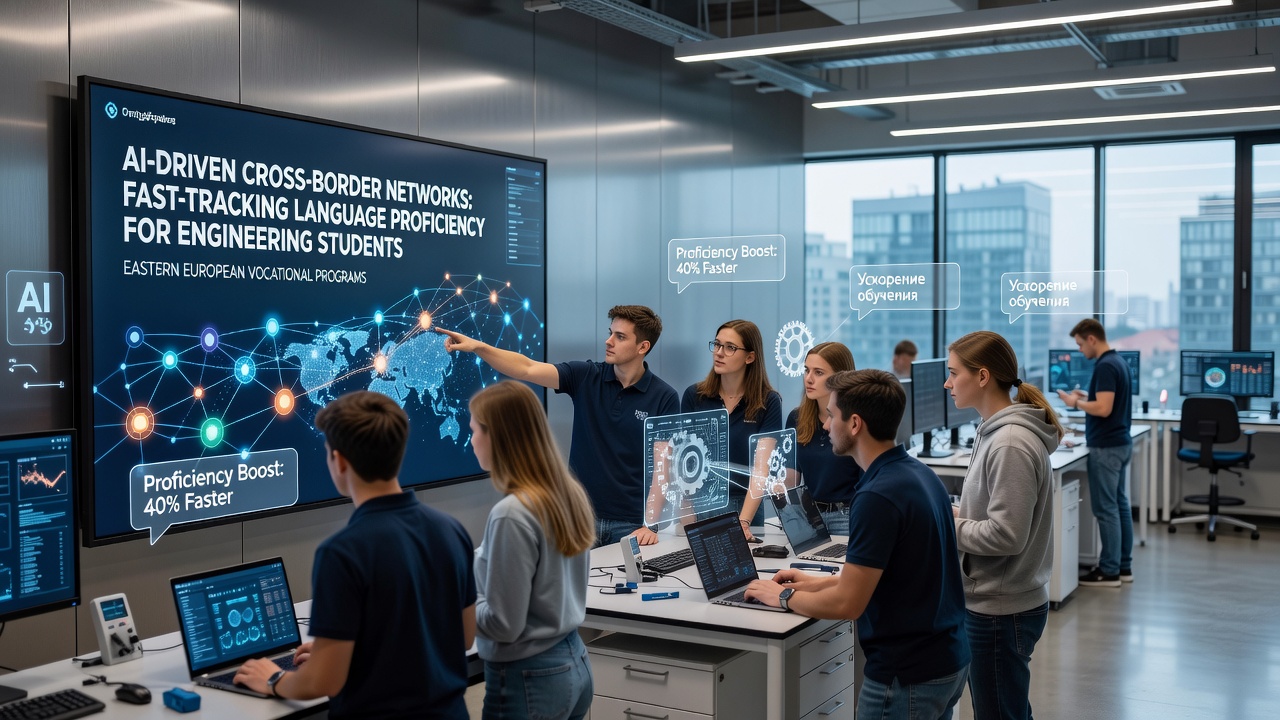
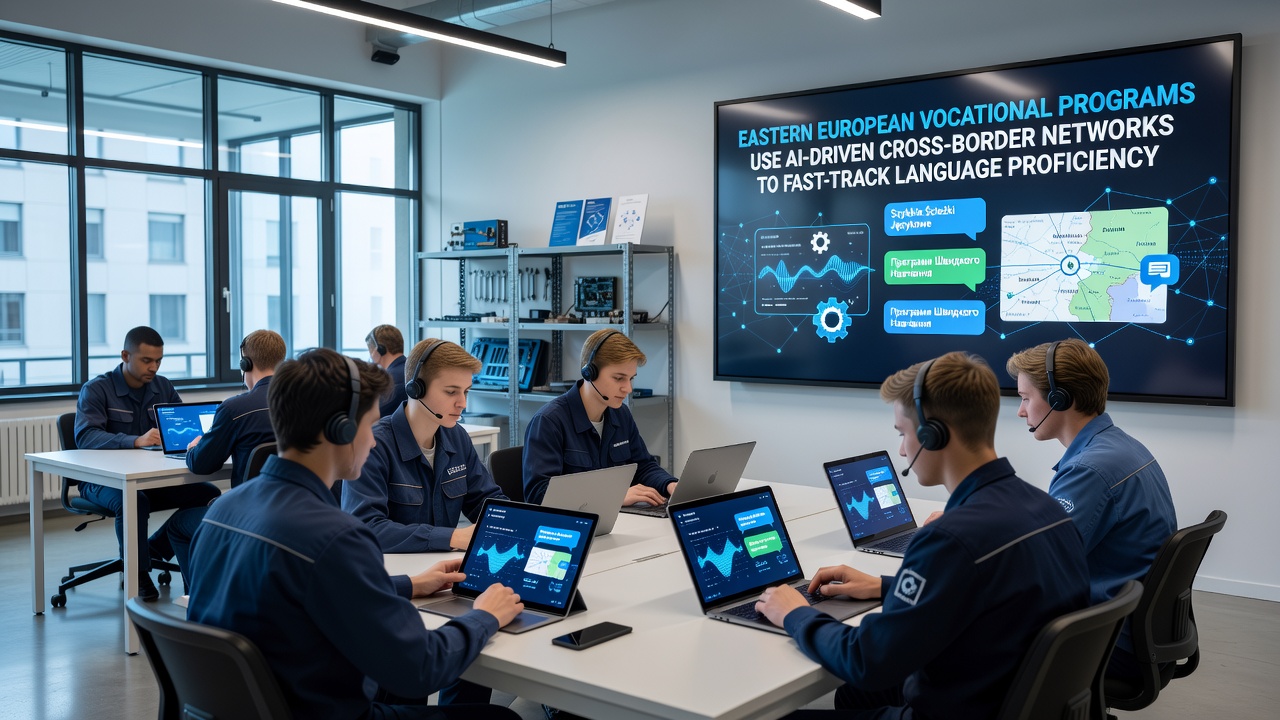
Vocational institutions across Eastern Europe have expanded AI-driven cross-border networks since 2024 to improve language proficiency among engineering students, and these systems connect training centers in Poland, Hungary, Romania, and Slovakia through shared digital platforms that analyze speech patterns and provide real-time feedback during technical discussions.
Data from the European Centre for the Development of Vocational Training shows enrollment in these programs rose 28 percent between 2024 and 2025, with participating students completing intermediate language benchmarks in an average of 14 weeks rather than the traditional 22-week cycle. The networks operate by linking learners to peers in partner institutions, where AI algorithms match conversation topics to specific engineering modules such as circuit design or structural analysis.
Network Architecture and Technical Integration
Each participating vocational center maintains local servers that sync with a central AI hub hosted in Prague, and the system processes audio recordings from classroom exercises to identify pronunciation gaps while suggesting vocabulary tied directly to technical manuals. Researchers at the Technical University of Cluj-Napoca documented how these matches reduced vocabulary acquisition time by 35 percent in a cohort of 420 students tracked through 2025.
Cross-border sessions occur twice weekly, and participants discuss case studies in pairs or small groups while the AI monitors fluency metrics and adjusts difficulty levels automatically. In September 2026 the network will add modules for Ukrainian and Serbian institutions, expanding the participant pool by an estimated 1,200 students according to preliminary agreements signed earlier this year.
Student Outcomes and Program Metrics
Completion rates reached 87 percent in the first full year of operation, and graduates reported higher placement rates in multinational engineering firms that require working proficiency in English or German. A joint study conducted by institutions in Budapest and Bucharest found that students who used the AI networks scored 19 points higher on standardized technical language assessments than peers in conventional classrooms.
One group of 65 Romanian students who joined the network in early 2025 advanced from basic to advanced technical reading levels within four months, and their instructors noted improved ability to interpret safety protocols and equipment specifications without translation support. The programs also track retention of specialized terminology over six-month periods, with data indicating sustained retention rates above 80 percent when students maintain at least one cross-border session per week.
Regional Collaboration Patterns
Cooperation agreements between vocational schools emphasize shared curriculum alignment rather than standardized testing, and each institution contributes engineering scenarios drawn from local industries such as automotive manufacturing in Slovakia or renewable energy projects in Hungary. The AI component then generates parallel language exercises that maintain technical accuracy while varying linguistic complexity.
Observers note that these partnerships have created informal mentoring chains where advanced students in one country assist beginners in another, and the platform records these interactions to refine its recommendation engine. Figures released by the network administration reveal that 62 percent of sessions now include at least one participant from a different country, up from 41 percent in the initial pilot phase.
Future Expansion and Resource Allocation
Funding for the next phase comes from a combination of national education ministries and EU structural funds allocated through 2027, and program coordinators have prioritized hardware upgrades that will allow simultaneous translation features for three additional languages by late 2026. Vocational centers in smaller towns have gained access through mobile applications that maintain the same AI feedback quality as desktop versions.
Training for instructors focuses on interpreting AI-generated progress reports rather than language instruction itself, and this shift has allowed staff to dedicate more time to engineering content delivery. Records from the central hub indicate that instructor preparation time dropped by an average of nine hours per cohort after teh first implementation round.
Conclusion
Eastern European vocational programs continue to refine these AI-driven networks as enrollment and cross-border participation increase, and the systems remain focused on measurable language gains tied to specific engineering competencies. Data collection efforts scheduled through September 2026 will provide further details on long-term employment outcomes for graduates who complete the accelerated tracks.